Undervine Weed Control Trial - 2019 /  by James Hook

YOUR INVITATION TO OUR UNDERVINE WEED CONTROL TRIAL

Friday, 23rd August 2019

DJ’s Growers Services would like to invite you to visit an under vine weed control demonstration. The demo compares the efficacy of 20x herbicide treatments and two mechanical methods. Our aim is to evaluate the range of available herbicides for the control of under vine grasses and broadleaf weeds during winter/spring. We would you to see the results and share knowledge with you.  

Time:   Morning viewing (10:30am to 11:30am) or Afternoon viewing (1pm to 2pm).

Location: 328 California Road, McLaren Vale, 5171  

Further information: Parking available at the entrance and along the driveway

RSVP by no later than Friday 16th August

To: Liz Ward via email eward@djsgrowers.com.au or phone: 0423 913 688

Herbicide resistant annual ryegrass in Spring 2018.

Herbicide resistant annual ryegrass in Spring 2018.

Do you handle bulka-bags? Watch this safety video. /  by James Hook

The safety of our customers and the farmers who use our product is our main priority. Agriculture is one of the most hazardous industries in Australia, DJ’s Growers & Incitec Pivot Fertilisers both aim to ensure that everyone gets home safely.

Summertime Summary…. Above average temperatures /  by James Hook

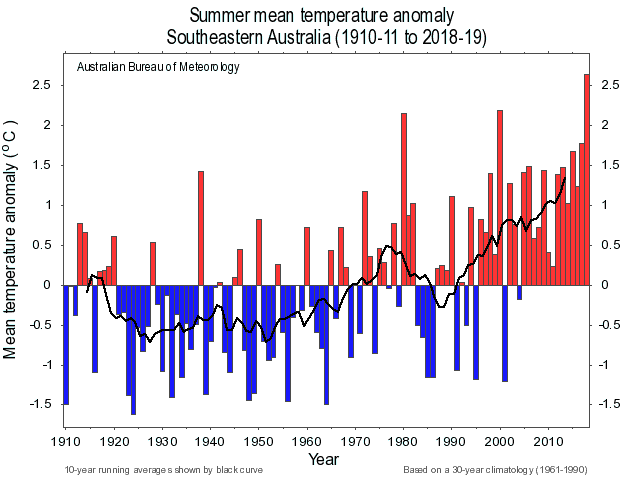
This summer recorded the greatest number of days above 35 degrees C since CropWatch was established in 2003 – this season there were 24 at Willunga.

tmean.seaus.1202.38082.png

The official BoM weather stations also set records. On 24 January, Noarlunga BoM recorded its highest summer temperature on record (above 45 degrees), and Kuitpo Forest Reserve also had its hottest temperature (44 degrees).

20190124.gif

Mean maximum and minimum temperatures were generally one to two degrees higher than average.

tmean.seaus.01.60350.png

Mean January temperature was 23.2oC as recorded by the CropWatch Willunga site.

Sustainability goes national - James Hook interview /  by James Hook

James Hook_ In grape growing, there are systems that you can use that wine consumers might be familiar with, like biodynamic farming or organic farming. Under those systems, to make a claim to say that you are bi (1).png

James Hook:       In grape growing, there are systems that you can use that wine consumers might be familiar with, like biodynamic farming or organic farming. Under those systems, to make a claim to say that you are biodynamic or organic on a label, a grape grower must follow a certification process and work with an auditing company to show that what you're saying is truthful. But if you're just a good standard farmer, you're doing things to the best practice you can but you're not organic or biodynamic, there wasn't a system where you could get certified in the same way.

There wasn't a way that you could say, "I'm an excellent wine grower and I'm doing best practice in my field. My products are sustainable and I'm working to make them better and better every year.”

There's no way I can put that on a label or, if I say it and make a claim about it, I've got no way of backing that up.

And that's where the idea of having the sustainable wine growing program came about, because it would give growers who were doing best practice in their field the ability to say, "This is what I'm doing and if you want to ask me questions about it, if you want to look back through my records, you can do so. This program will back me up and certify me."

Kirrilee Hay:        You mentioned two terms there, organic and biodynamic. How is that different to natural wine making, which seems to be a bit of a term people are throwing around these days?

James Hook:       Natural wine making can be defined as not adding anything in the winery during grape fermentation and maturation. Natural wine is not making a claim to the practices used to grow grapes.

Organic and biodynamic are both systems for growing grapes. In the case of organics, it's not using any synthetic products (fertilisers or pesticides), and in the case of biodynamics it's growing organically, but you also do certain procedures governed by the lunar cycle. Both of those systems are to do with growing grapes in the field, and the same thing as growing lettuce or whatever you like. Whereas natural wine making is just saying that they don't do anything in the winery. Literally they take grapes, crush them, don't filter them, don't add yeast, just sort of let the process happen and then sell it to you.

Kirrilee Hay:        And then how does your sustainable wine growing program work with those systems, or how do the systems differ?

James Hook:       Now, a sustainability system and audit will work for any system (Californian example in the video). A high percentage of grape growers in the McLaren Vale region are organic farmers, the highest number in Australia. Almost all of all of them in the McLaren Vale area, are also members of this program as well, because this sustainable wine growing system helps the organic guys with their processes and practices they can be a part of it. They're completely compatible with each other. Where it helps a grower who is just doing normal farming (and when I say normal farming, I mean that they're not restricted to using organic products, so they're using just whatever tool they need at the time; they're using that whether it's organic or not organic), those growers, it gives them the ability to say, "Well, what I'm doing is absolutely best practice because I'm getting certified. Auditors are coming in." The program is sort of demonstrating how they make good decisions all the way through the year, and an organic grower needs to make good decisions just as much as a non-organic grower. They both have to make good environmental decisions, and that's what the sustainable wine growing program is a way of demonstrating and showing.

Kirrilee Hay:        What might some of these decisions be?

James Hook:       Let's say that you notice that there is a weed growing in your vineyard that hasn't been in there before. It's the first time you've detected it. The first step is you go out and you detect that you've got something. Now, the second step is you've got to work out is it actually a problem? You've never seen it before, but is it actually affecting your business? If you then go and decide that it is affecting your business, you have to then go and work out what's the best method to get rid of it. Now if you're a conventional farmer, they've got the ability to go out and get some herbicide and treat that weed with herbicide and remove it from their property.

An organic grower doesn't have the herbicide option, they might make a decision and say, "Okay, I'm going to employ someone. They're going to drive to my property, they're going to burn some carbon as they do it," because they've got to bring a car out. "They're then going to go out with a hoe and they're going to hoe that vineyard and remove it." Both the conventional farmer and the organic farmer must weigh, "Is it worth me controlling this weed? Is it really a problem for me?” And then they have to sort of account for what they are doing. The grower who's used herbicide has to say, "I used herbicide. Here's how much I used, here's how I worked out the rate."

Whereas the grower who's an organic grower and they've got someone, they employed someone to come in and hoe it, has to show, "Well, I employed this person. I employed them under the award that they're meant to be paid. I took into account the carbon that they used to get here or that they used on my property to use my equipment." So both ... It's just that constant justifying of decisions and making note of all the decisions you make in a year.

Kirrilee Hay:        You mentioned weed control perhaps being an element to it. What about the variety of grapes? Does that have an impact on this type of thing?

James Hook:       Well, different grapes are easier to grow than others. Some are well suited to a place where it rains a lot, and others are much better at being dry. The program also covers the way you might plant a vineyard as well, and all the decisions you make on the way to do that. Everything that can be thought of is covered in the system.

Kirrilee Hay:        How does the McLaren Vale wine region compare with some of our other well-known wine regions across the state, in terms of climate or environmental considerations?

James Hook:       The McLaren Vale region is what we call a peri-urban environment. Fancy way of saying lots of people live in the area. And because there's lots of people living in the area, it's very sensitive to what happens on farms. A lot of farming properties lean up against people's houses, you have to consider what you do and do not do in that environment. So because McLaren Vale is that kind of region, it's very adaptive, very progressive, always looking at trying to better ways to do things, because there's a lot of interest in what's happening.

In terms of its climate, McLaren Vale has about 600 millimetres of rainfall. It's a dry area, about the same rainfall as what the Adelaide CBD, in terms of how much rain it gets. And that helps, because we get the long, dry summer, which really naturally stops lots of disease. That's why you're able to grow grapes even in with limited spraying under organic or biodynamic conditions, because they're not under a high disease pressure.

Kirrilee Hay:        We've been talking a little bit about sustainable grape growing, and you touched on it very briefly when discussing natural wine making; but are there sustainability practices in that secondary production process that these grape growers would also consider?

James Hook:       Well, the other good way of thinking of it is obviously a waste train being produced from a vineyard. Now, vineyards aren't heavy producers of rubbish and things like that, like hard rubbish or other things, but they do have a waste stream come off of a vineyard. And so that stream also is covered under the sustainability program. Growers just monitor what they're doing and then justify their actions to get rid of that waste stream. It's hoped that the program will eventually go into wineries as well. Wineries are covered under food production systems. A recognisable system is called ISO 9001. If you go to a shopping centre and probably have a look on some of the products, you might see it. You might see the term ISO on the product.

And again, the sustainability program and a food safety program kind of work with each other quite well. The sustainability program in the vineyard is showing that the grower was making good decisions as they grew the grapes, and then when it goes into the winery, if the winery's covered by something like ISO 9001, they're showing you that everything they did inside the winery was safe and produces a product that can be tracked back.

Kirrilee Hay:        This program, is it currently exclusive to the McLaren Vale region, and are there prospects that it could be rolled out state wide?

James Hook:   In July 2019 a national programme called Sustainable Winegrowing Australia will be launched.

It started in McLaren Vale region. The ideas came from here and it was developed here and it has about a 70% acceptance rate now. About 70% of the vineyards are part of the program. It's now been, in the last probably three or four years, been made available to anyone in Australia who wants to register for it. And there are other pockets of Australia and other parts of South Australia that it's getting traction and growers are joining up for it. McLaren Vale's kind of the home of it because it started here first, but it was always intended that it could be offered to anyone who wanted to try and better their practices wherever they were.

Kirrilee Hay:        Do you have any statistics around the energy savings that this program has provided to growers, or waste savings or anything like that?

James Hook:       Yeah, the program actually allows benchmarking. You can look at what was happening at the first year of the program, and you can look at what's happening in the current season. And you can benchmark years against each other and you can see what growers were using. It shows that once you start having to justify your actions and take account for your actions, unsurprisingly, you start using less things and producing less things. And we're able to show some of the chemical usage dropping off quite dramatically compared to what it was before there was this system. Growers getting a lot more turned on to, "Oh, well actually, I don't really need to do this and I'm being asked to justify why I want to do it," they can show it that way. And it's the same thing as once you start showing how much carbon you're using with your actions and then you have to take note of that and come up with targets to reduce that, that you funnily enough start to see that reduce as well.

Specifically you can go through the years and you see a general improvement trend in what people are doing, and you can actually pick out bits that if you want to do carbon, you can see well, actually, how much better people are than they were five years ago. I haven't got those in front of me, but you can pick it apart and look at all sorts of data like that. Whereas before there was a sustainability program, you had no way of knowing. And people's memories can't remember like, "How much fuel did you use five years ago?" "Oh, I'd have absolutely no idea." But if it's in the program, it's right there, you can see it. In 2013, I used 5000 litres, and in the last year I used 4500, so I’ve made a saving.

Kirrilee Hay:        That's great. And I guess cost savings would kind of just come with that as well.

James Hook:       Obviously cost is a big driver of farming, and any business. Producers strive for cost savings… Again, I'll try and use a real world example. Each year to see how your vineyard is performing against everyone else in the system anonymously ... You'll get the data back saying you sprayed for weeds four times, but the average in McLaren Vale was one and a half. You can say, "Well, why am I doing that 65% more than what is average?" There may be a legitimate reason for that, but then the grower can quickly see, "Well, I'm doing something that my peers are clearly doing a lot less than I am." So they can look at that and go, "Well, that's costing me money. I need to have a look and see if I can prevent that, stop that, adopt practices that my peers are doing."

Kirrilee Hay:        Who are some of the key growers that are part of this program, and how has it benefited their business?

James Hook:       One of the high profile growers that people would know would be d'Arenberg Wines. Their vineyards are also organically certified as well. They have both. They have the sustainability program and they have an organic certification. They're members of both. So someone like them, they see that benchmark data as very useful, because they get to see where their vineyards sit against some of their peers. And they can say, "Oh well, this part of our vineyard we're spending a lot more. We're doing more practices and we're doing more work on this than ..." I use the word peers because I'm saying other grape growers. You could also say, "Well, that's our competitor grape growers. They're far more efficient than we are, so we need to look into that."

And so even a high profile company like d'Arenberg, when they see the data they get back as being very beneficial to streamlining and improving what they're doing. Because really, the grape industry's vital to South Australia, that we do need to be doing it sustainably. It's been relied upon a lot in the last 25 years economically in this state, and it's important than in the next 25 to 50 years, that grape growing and wine making's still such a powerful and as important part of our community and our state.
Our long term vision /  by James Hook

As we grow as a business, DJ's Growers is very conscious of the footprint that is left behind by both us and our clients.

We aim to:

*Increase the uptake of composts, mulches and organic fertilisers (particularly our DJ's Product range) with our clients to improve soil. While sales of products will help with gauging uptake, yield and quality data will be the ultimate guide of success.

Picture+849.jpg

In the early 2000’s, after a visit from Dr. Clifford Ohmart, who had developed California’s first ever third party certified sustainable winegrowing program, the Lodi Rules, the innovative winegrowers of the McLaren Vale were inspired to develop their own version of a sustainability program, which would, ‘improve viticultural practices, fruit quality and the financial viability of the region’. Led by local winegrower and academic, James Hook, many of McLaren Vale winegrowers initiated a series of informal seminars and workshops to help improve viticultural practices. They started a growers bulletin called Crop Watch, that provides, amongst other things, information from nine weather monitoring stations throughout the region, as well as pest and disease alerts. They also wrote a number of grower-endorsed codes of conduct on subjects such as soil and water management, pest and disease controls, and economic benchmarks.

*Support and encourage our clients with reporting their sustainability benchmarks. Increased uptake of programs such as Sustainable Australia Winegrowing amongst our clients, and the achievements made when compared to previous data will show if this is successful.

Recorded on the last day of summer, this vineyard we look at early autumn leaf loss and ripening with Gill Gordon Smith.

How important is post harvest irrigation and fertiliser?

*Continue to champion integrated pest management (IPM). While starting to become more commonplace, IPM is still seen as being difficult to manage and not achievable in many situations. By continuing to train our staff in IPM principles, insect identification, and the effect of insecticides on beneficial species we can make sure that we are advising the use of chemical options in a continually responsible manner. By speaking to grower groups, and spreading the message of IPM amongst agronomy and agricultural retail peers, we can help continue to make IPM more accepted in the general grower community.

*Continue to support local biodiversity and re-vegetation groups. Increasing areas of re-vegetation and decreased problem weeds will be the ultimate measure of success, as will the longevity of these groups that can only exist with support from local volunteers and business support.

The first Homeless Grapes Project started in 2015 with one little Facebook post. Jock Harvey, from Chalk Hill Wines, posted that he had a surplus block of grapes and anyone was welcome to them if they made a donation to charity.

*Continue to support the Homeless Grapes Project which donates grapes, grape picking and winemaking to raise money for the Hutt Street Centre.


2019 McLaren Vale Wine Vintage Report /  by James Hook

The McLaren Vale wine region relied on its advantage, natural and constructed, to have a successful vintage for 2019. Specifically, proximity to the moderating temperature influence of the Gulf St Vincent, reliable spring rainfall, and access to multiple irrigation sources and helped vineyards cope with a challenging dry and hot season.

The growing season rainfall from October to the end of March was 142mm, compared to the average of 172mm, the deficit in rain occurring during summer. The dry conditions posed significant challenges for local grape growers. A lack of summer rain meant the irrigation was important to make up for the shortfall. Using timely irrigation, firstly to develop a canopy large enough to sustain vineyard crops, then maintain the health of vines until harvest was vital.

Disease pressure (governed by rainfall, humidity and temperature) was very low for this vintage compared to the 2017 Vintage, our last season with above average rainfall, and other seasons with serious issues (1993 – downy mildew, 2011 - botrytis).  

There were two specific extreme weather events that did significantly alter vineyard development and ripening. Firstly, there was an intense hail storm in late November. The storm saw high speed winds buffet vines and hail fell leaving scars on some fruit. Then in late January we experienced our hottest daytime temperature since January 2009, 45oC, plus several days in late February where the temperatures were about 38oC.

20171220-DJI_0512.jpg

What was fruit like at harvest? Good, but there wasn’t as much of it as we’d like. At harvest vineyards in the McLaren Vale wine region generally had lower yields of fruit with more intense flavour. Vines had more open bunches, which weighed less than average.

The collective "we", the McLaren Vale grape and wine community, live and breathe our “big three” red varieties (Shiraz, Grenache and Cabernet Sauvignon). Shiraz accounts for approximately 60% of our harvested tonnage. Cabernet Sauvignon is 19% and Grenache is 5%. Shiraz yields were significantly down, while Cabernet Sauvignon and Grenache held better. For the second season in a row, our late season varieties (Mourvèdre, Montepulicano and Nero d’Avalo) held well until they were picked in late March.

Grape picking took just over 4 weeks to complete starting at full pace in the first week of March and ending at the end of the month. The report from winemakers on wine quality has been good, and winemaking was made easier by lower tonnages allowing for close attention the winery. Winemakers could use extended ferments if they required as there was little pressure to turn fruit into wineries compared to bumper years.

The combination of hail in November, a dry summer and hot weather in January and February is expected to reduce the overall size of our harvest compared to recent years. Crop yields expected to be 25% down on Vintage 2018, which in turn was 20% down on Vintage 2017 which was our last bumper crop.

National sustainability programme announced /  by James Hook

A single national sustainability program, Sustainable Winegrowing Australia, was announced today. Sustainable Winegrowing Australia will formally commence on 1 July 2019. This announcement expands our locally developed SAW system and joins it with ENTWINE to form a national one.

2012 SAW release at the McLaren Vale Bocce Club.

2012 SAW release at the McLaren Vale Bocce Club.

The Wine Idealists 2015 article gives an overview of McLaren Vale’s role in pushing for a national sustainability programme: https://thewineidealist.com/2015/03/27/total-sustainability-saw-mclaren-vale/

Sustainable Winegrowing Australia will be managed day to day by the AWRI, overseen by a steering committee comprising representatives of Australian Grape & Wine, Wine Australia and the AWRI, and advised by an industry advisory group made up of program users, regional representatives and other key stakeholders.

DJ’s founders Derek and James welcome the new programme and look forward to helping growers nationally improve their vineyards.