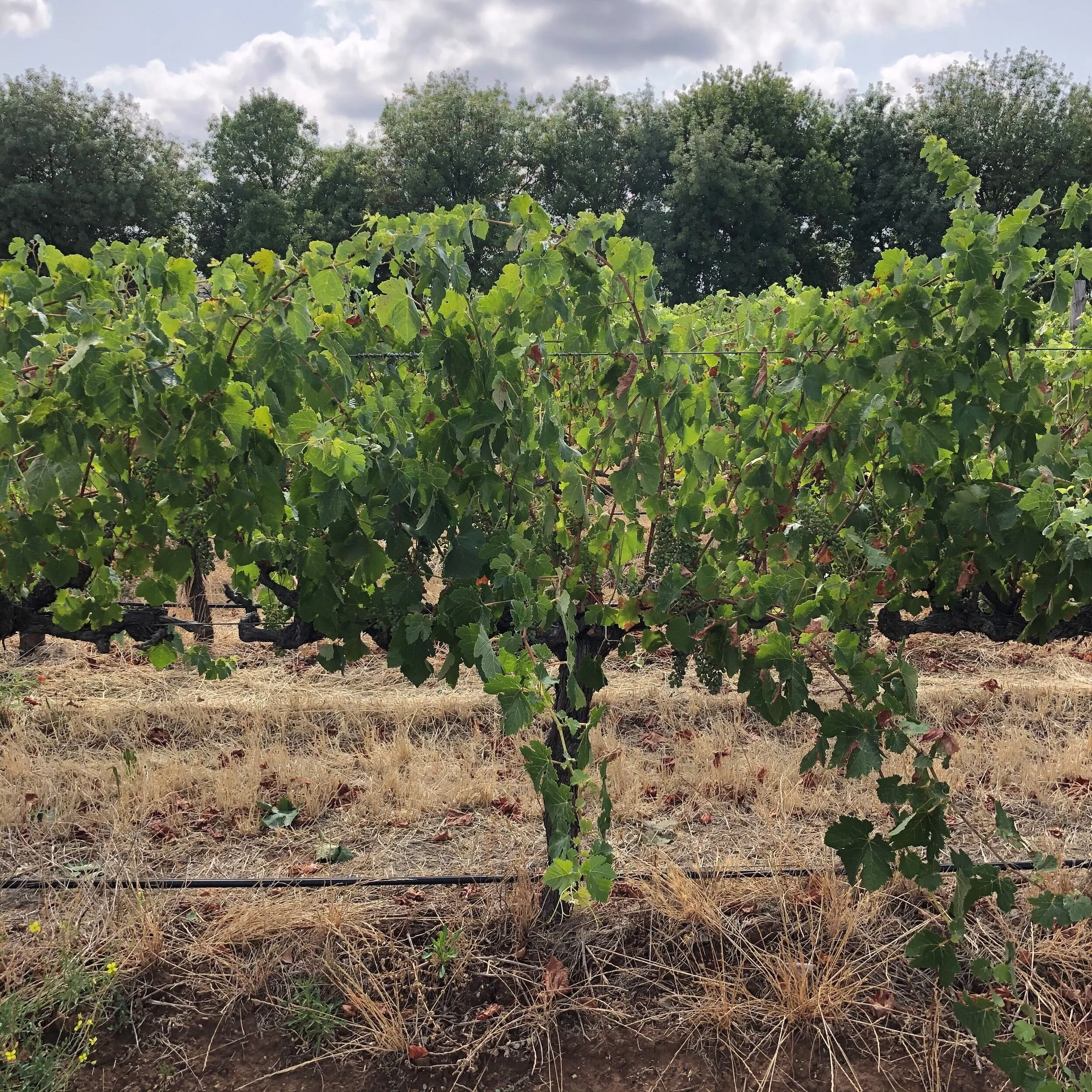
Herbicide spray drift ID photos by James Hook

Herbicide spray drift is an occasional problem in vineyards..

For the vineyard pictured here the product Metsulphuron (tradenames Ally, Aim, Brush-off) is alleged to have drifted into a vineyard from a neighbouring property four weeks before the pictures were taken (early spring). A week after application the first symptoms were seen.

IMAG0243.jpg

Herbicide drift shows as the ‘hormone’ shape, cupping and stunting of leaves (above and below) poor flowering and damage to the vine growing tips.

IMAG0244.jpg


Disappointingly, herbicide spray drift is an ongoing issue in vineyards, and this is a timely reminder.


PIC: Spray drift affected vineyard. Poor shoot growth in spring.

PIC: Spray drift affected vineyard. Poor shoot growth in spring.

Look out for your tribe by James Hook

Since Winston Churchill used the phrase Black Dog to describe the bouts of sadness he experienced for much of his life, it has become the shorthand for the crippling disease we call depression.

Depression is a dog that can bite at anybody’s heels. These thoughts are to bring that hidden beast of a disease into the open.

Australian rural communities are losing too many people to this preventable sickness, and our beautiful district is never immune. Capable people are being laid low, or lost forever.

Every day a person loses to depression; is a loss to our whole community.

Since the economics of the wine industry have become depressed, all of us who work in it can feel alone and marginalised through the intense stress it brings. We are all under enormous pressure which can make our problems seem insurmountable.

Ordinarily happy folks suddenly become easy targets for the Black Dog.

Unfortunately I know this feeling, as do many of my friends and colleagues. There have been times in our lives where things have seemed too hard and the future looks too narrow. The feeling is like a crushing weight on your chest.

We must be very careful to look after each other, learn to watch out for symptoms, and stick together.

It's important to know that depression is a common illness which affects roughly 1 in every 5 people. Good treatments are available through your family doctor and, with treatment, sufferers should fully recover.

Beyond Blue is a good start for specific information. Its experts provide information especially tuned for people in rural and remote communities.

It's not always easy to help someone who may be experiencing depression. It can be hard to know what to say or do.

When you feel concern for a friend you think may be depressed, encourage them gently to talk about how they feel. Listen patiently: sometimes, when somebody needs to talk, they might not seek advice, but just feel like talking it through. Sometimes they may be vague about their concerns.

Gentle open-ended questions like "So tell me about...?", open the door for an answer bigger than 'yes' or 'no'. This is often a good way to start a conversation. If conversation becomes difficult or your friend gets angry, stay calm, be firm, fair and consistent and don't lose control.

Simply spending time with a depressed friend lets them know someone cares and understands them. Encourage them to seek professional help from their family doctor or at least get online and look at information themselves.

We need to watch out for the Black Dog now more than ever. Our tribe needs to stick together. As an industry, a community, and as individuals, we need to 'walk the walk.' Actions speak louder than words. So please look after your mates. Make a call. Go visit.

Website - Beyond Blue Website: The national depression initiative.

Hotline - 1300 22 46 36

https://www.lifeline.org.au/Get-Help/Facts---Information/Rural-Mental-Health/Rural-Mental-Health

How can we combat salt uptake in grapevines? by James Hook

This is the problem:

Extended periods of dry weather conditions mean that vineyards often show show damage symptoms from salt (sodium and chloride). As soil moisture reduces vines pull water harder from the soil (plants create a negative pressure from the leaves to the roots - pulling harder means a higher negative pressure).

As the vines pull harder they take up more salt with the water. Eventually the concentration in the leaves becomes toxic and the leaves 'burn.' Sodium and Chloride levels in the developing fruit also increase which can have a detrimental effect on wine quality. Look for leaves that are small, curled downwards and browned at the edges on most shoots of the vine (below).

DSC_0179.JPG

Do you have a solution?

Yes, we can craft a strategy using some or all of these below, how many of these are practical in your situation? We think the strategies in bold text are practical in almost all situations.
• Schedule irrigation applications to ensure adequate leaching of salts.
• Mound soils with limited drainage or shallow depth.
Increase soil organic matter both inseason, using humic acid, and post harvest by suing compost. Organic matter helps buffer soil salinity by binding to sodium.
• In the long term replace own-rooted vines with saline-resistant rootstocks to minimise the effects of salinity.
Mulch the under-vine row to reduce surface evaporation and minimise surface salinity.
• Shandy saline water with a less saline source of water (recycled water mixed with bore water etc).
• Reduce the amount of saline water applied to the vines i.e. Partial Rootzone Drying (PRD).
• Take water, soil and tissue tests. Monitor salinity to help make management decisions.

Photo+2.jpg

Assessing Fire Damage to vines - a quick guide. by James Hook

Q- How do you tell how damaged vines are by fire?

A- You look at the health of the trunks of the vines by cutting into them. We call this Cambium Testing. We normally do this cut on the trunk, but you can make this cut anywhere (roots, cordon or shoots).

You make a shallow slice (3mm), with a sharp blade, across the surface to expose the cambial layer under the bark.

The colour of the vine tissue that you see will give an indication of what is going to happen to the vine. A green colour indicates live tissue. Vines with green tissue are hopefully going to survive by throwing our water shoots.

Green tissue indicates the vine is still moving nutrient and water up the stem.

Green tissue indicates the vine is still moving nutrient and water up the stem.

Burned trunk, but cambium layer looks green.

Burned trunk, but cambium layer looks green.

Note the burned vine bark.

Note the burned vine bark.

Vines with brown and dry looking tissue have likely died and will not be able to be resurrected.

For more information visit the AWRI resource pack:

https://www.awri.com.au/…/information-packs/managing-fire-…/


Or look at CropWatch Adelaide Hills.

WSET and IWSC reveal their Future 50 by James Hook

The Wine & Spirit Education Trust (WSET) and International Wine & Spirits Competition (IWSC) has announced its inaugural Future 50.

The Future 50 is a new initiative created by WSET and IWSC in celebration of their joint 50th birthdays to select 50 future influencers of the global drinks industry.

The 50 on the final list hail from 14 countries, with roles ranging from distiller to viticulturist and historian to bartender. There were three winners from Australia in the final list: our very own James Hook, DJ’s founder, and Nick Glaetzer from Tasmanian urban winery Glaetzer-Dixon Family Winemakers in the wine category and Ryan Hartshorn in the spirits category.

WSET Chief Executive, Ian Harris, said: “We are delighted with the final Future 50 list.  It offers a genuine reflection of the young talent we have in the wine, spirit and sake categories globally. Each of the winners should be very proud their achievement.

“We look forward to seeing them making their mark and shaping the future of our industry.”

There were more than 600 nominations for the first round, a longlist of professionals working as winemakers and distillers, in product development, design and distribution, marketing, journalism, hospitality and everything in between. This longlist was whittled down to 200 in the second round, then to a final shortlist of 82 names.

IWSC Chief Executive in Fine Wines and Spirits, Christelle Guibert, said: “Narrowing down the 600+ nominations we received from around the world was a rigorous and lengthy process, with each candidate showing a wealth of talent and expertise.

“We are confident that the final 50 showcases the brightest sparks of the wine, spirits and sake industries, and look forward to seeing their careers develop over the coming years.”

Choosing the winners was done through a two stage vetting process using the knowledge and authority of panel of expert judges from around the world. These include Stephanie Macleod (Master Blender, Dewar’s), Richard Paterson (Master Blender, Whyte & MacKay), Xavier Rousset MS (restaurateur), Joe Fattorini (The Wine Show), Ian Harris (WSET) and Allen Gibbons (IWSC), supported by a global regional advisory panel covering 17 countries.