
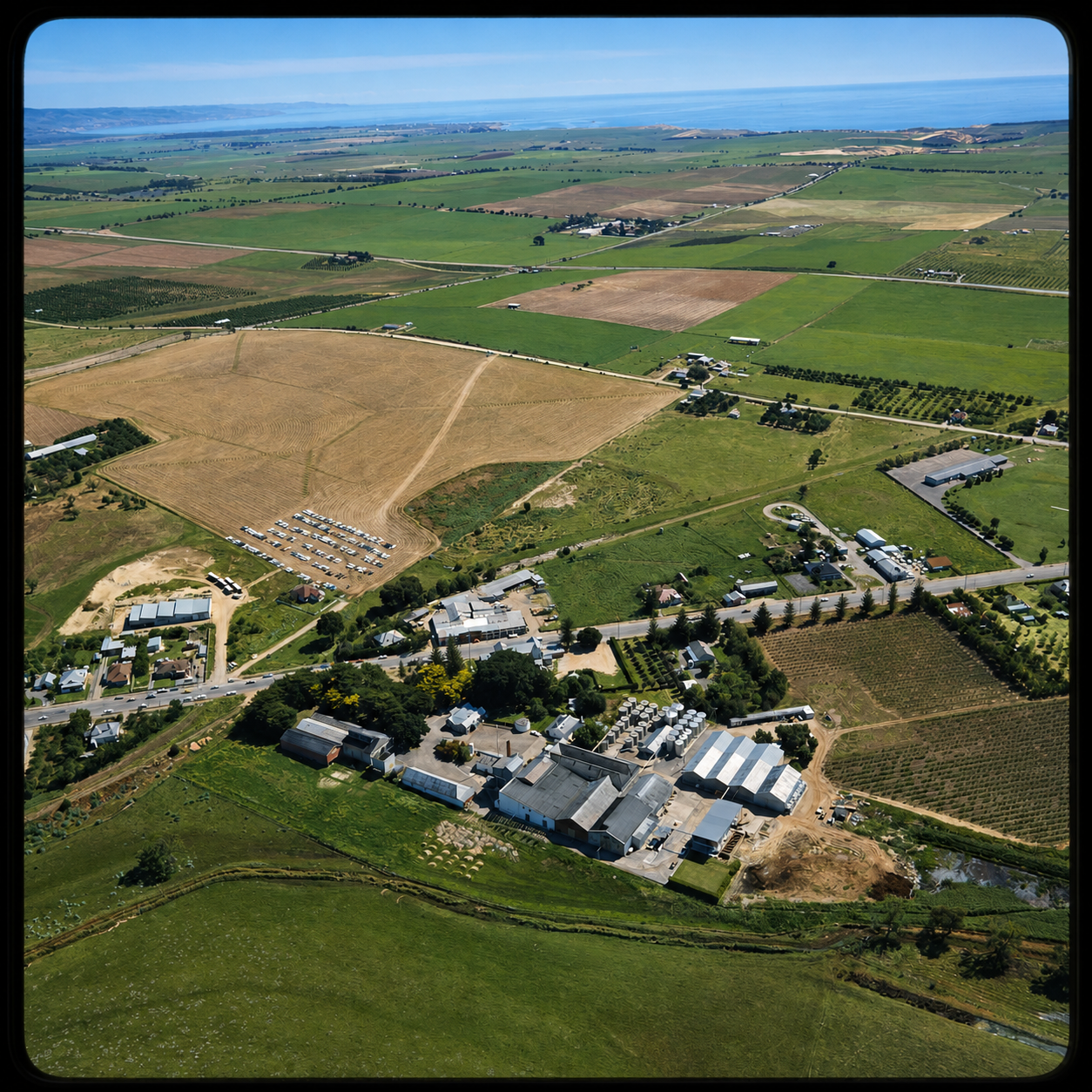
McLaren Vale Fruit Packers c. 1974 - image restored by James Hook - DJs Growers
Long before McLaren Vale became internationally recognised for wine, the district was built on mixed farming, orchards, and the movement of fresh produce to Adelaide and beyond. One of the clearest reminders of this earlier era is the old McLaren Vale Fruit Packers building, opened around 1928 and closely linked to the railway line that arrived in 1917.
Today, many people pass these surviving structures without realising their importance. Yet buildings like this tell the story of how the region evolved from a scattered agricultural district into one of South Australia’s most significant food and wine regions.
A Railway That Changed the District
The arrival of the railway line in 1917 transformed the southern districts. Before rail transport, moving produce from the Willunga and McLaren Vale district to metropolitan markets was slow, difficult, and heavily dependent on horse-drawn transport over rough roads.
The railway created a direct connection between growers and the Adelaide market. Suddenly, fruit, wine, produce, and agricultural supplies could move far more efficiently. This changed the economics of farming in the district and encouraged larger-scale commercial production.
The Fruit Packers building emerged directly from this opportunity. Constructed beside the railway infrastructure, it became part of a growing agricultural supply chain that linked local growers to urban consumers.
More Than Wine
Modern perceptions of McLaren Vale often focus entirely on vineyards and wineries. However, the district historically supported a far broader agricultural economy.
In the early twentieth century, orchards, currants, almonds, vegetables, and mixed farming were all important components of the local landscape. Fruit packing sheds were essential infrastructure in this system. They allowed produce to be graded, packed, stored, and prepared for transport.
The McLaren Vale Fruit Packers building reflects a period when agriculture in the district was highly diversified. Grapevines were important, but they existed alongside many other crops.
This diversity also shaped the region’s settlement patterns and infrastructure. Railway sidings, storage sheds, packing facilities, and agricultural merchants developed around the needs of growers. Many of the district’s surviving industrial-style buildings date from this period of expansion.
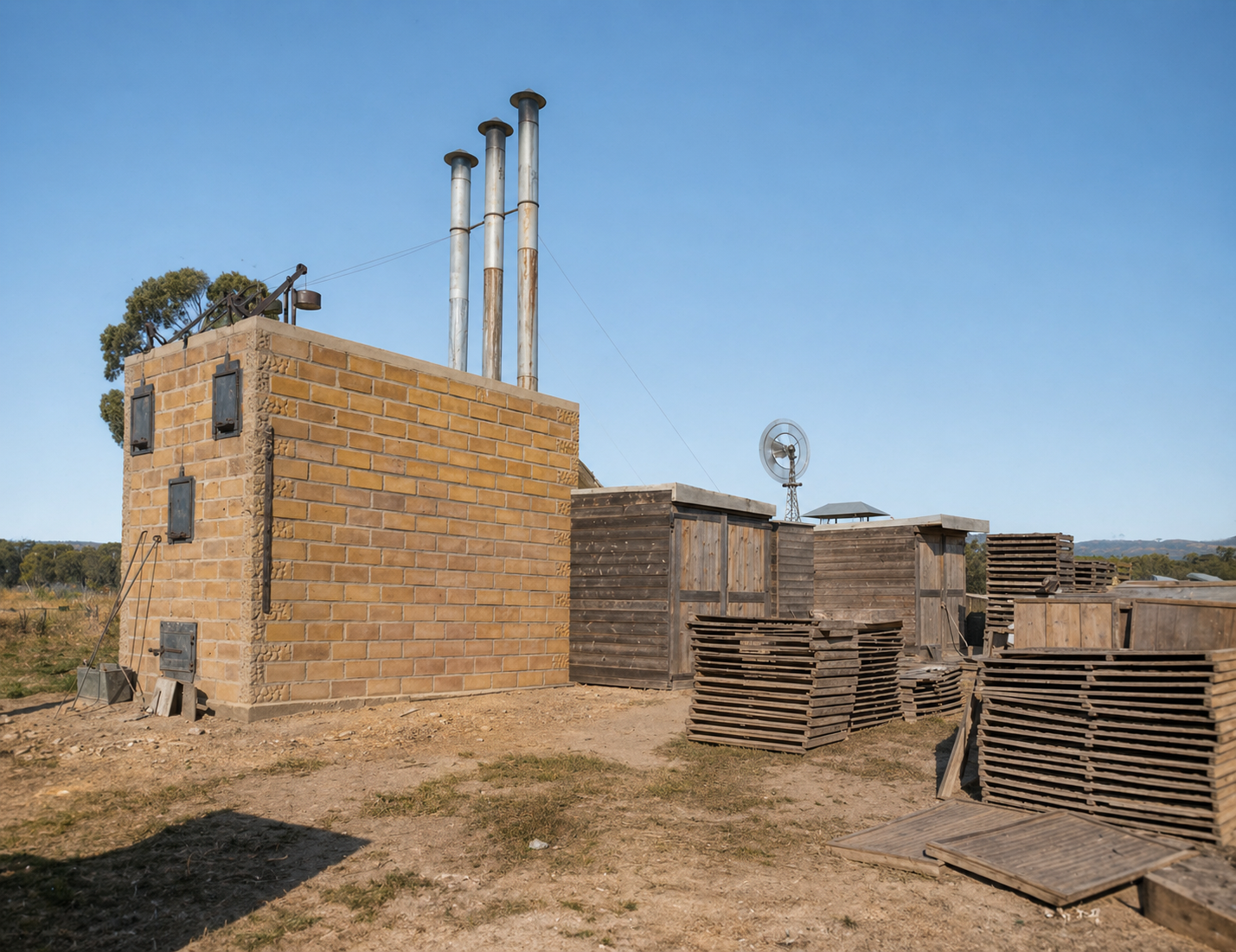
Fruit drying house at Tatachilla c. 1900 - Image restored by James Hook - DJ’s Growers
The Importance of Packing Sheds
Packing sheds were once central to regional communities across South Australia. These buildings provided employment, coordinated freight movement, and acted as gathering points during harvest.
Inside these sheds, produce was sorted by quality and packed into crates for transport. Timing was critical. Fruit had to move quickly and efficiently to maintain quality before reaching markets.
The scale of investment in facilities like the McLaren Vale Fruit Packers building demonstrates the confidence local growers had in the district’s agricultural future during the late 1920s.
A Snapshot of Interwar South Australia
The late 1920s and early 1930s were transformative decades for regional South Australia. Agricultural communities were modernising rapidly, adopting mechanisation and improved transport networks.
Buildings such as the McLaren Vale Fruit Packers shed reflected this optimism. Their construction represented permanence, growth, and confidence in regional industry.
Despite economic challenges during the Depression years, these facilities continued to support local production and helped maintain regional employment.
Remembering the Earlier Landscape of McLaren Vale
The surviving agricultural buildings of McLaren Vale are reminders that the region’s identity was built over generations of evolving farming systems.
Today’s vineyard landscape sits on foundations created by earlier industries including orchards, currants, mixed farming, transport infrastructure, and agricultural cooperatives.
The old Fruit Packers building is therefore more than an industrial relic. It represents a key transition period in the history of the district — when improved transport and agricultural coordination helped shape modern McLaren Vale.
As redevelopment continues across South Australia’s regional towns, preserving and documenting structures like this becomes increasingly important. They provide physical links to the working agricultural history that created many of today’s wine regions.
For locals, these buildings are familiar landmarks. For visitors, they offer a glimpse into the earlier economic life of the district. And for historians, they help explain how transport, agriculture, and regional communities developed together across the twentieth century.
The story of McLaren Vale is not only about wine. It is also about railways, packing sheds, orchards, freight networks, and the generations of growers who built the district long before wine tourism existed.