
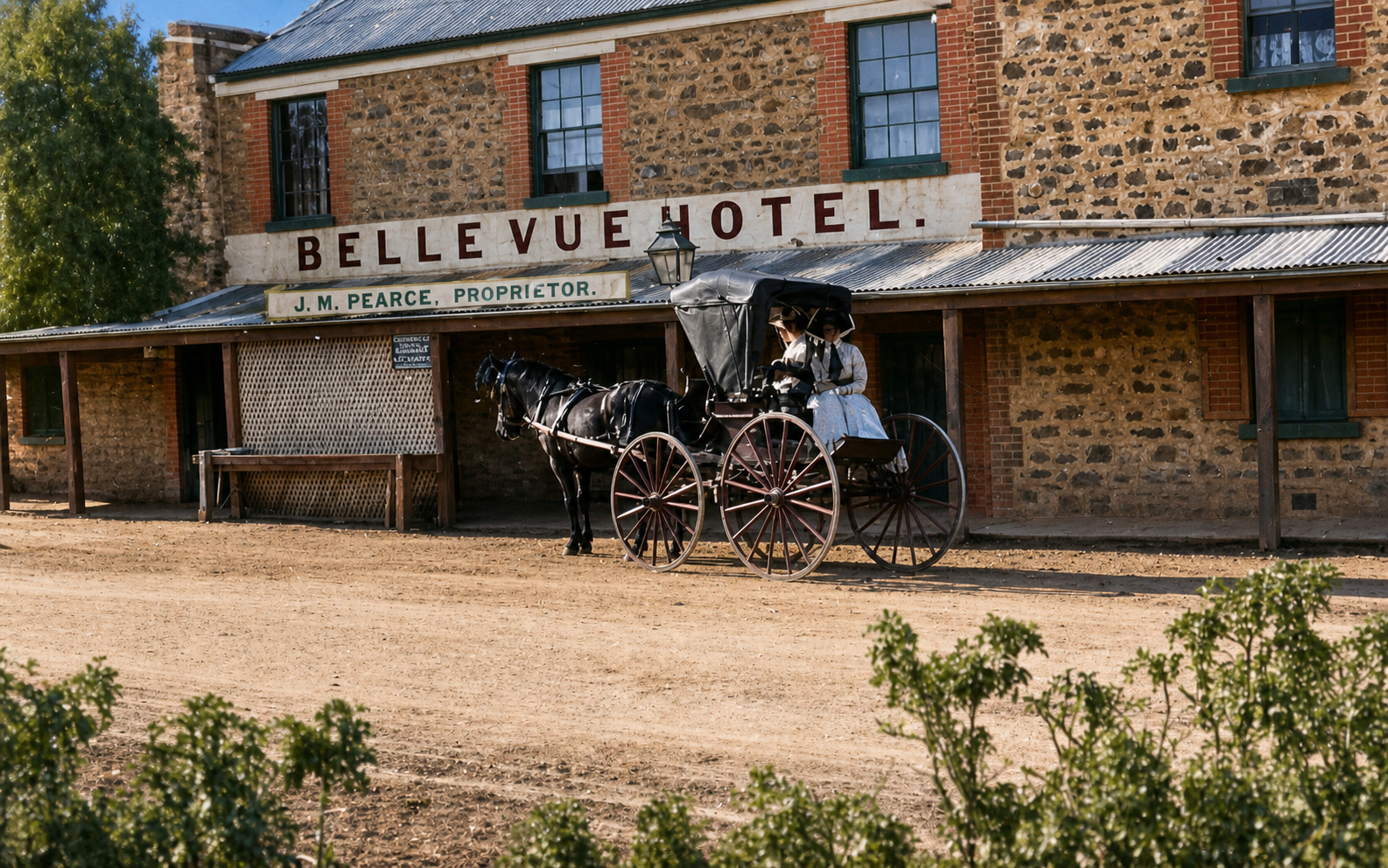
1910 appearance.
Long before the modern wine region became internationally recognised, the township was divided into two small settlements — Gloucester and Bellevue — which slowly grew together through the nineteenth century. The hotel stood at the edge one of those original villages and became a lasting symbol of the district’s transformation from farming settlement to wine town.
The building began life in 1857 as the Clifton Hotel, constructed by Richard Bell, founder of the township of Bellevue. Bell named the hotel after his wife’s family, the Clifts, and the structure quickly became a landmark on the route through the southern vales. In those early years the district was still developing, with wheat farming, flour milling, lime burning and bullock transport driving the local economy.
The first licenees were Clifton Hotel; A Bock, jnr 1857, J. Clift, snr 1859-60, and N. Clift 1861-63.
Bellevue itself was a practical working settlement, made up of cottages, inns and service buildings supporting agriculture and transport moving south toward Encounter Bay.
Like much of rural South Australia, the district experienced difficult decades during the nineteenth century. Population decline and economic change saw the Clifton Hotel fall into disuse by 1864. For nearly twenty years the building sat largely dormant as Bellevue faded into a quiet rural hamlet.
Its revival came through one of the defining figures of Australian wine history — Thomas Hardy. After purchasing nearby Tintara Winery in the late nineteenth century, Hardy also acquired the former Clifton Hotel. He expanded the building by adding the distinctive gabled wings still associated with the structure today, renamed it the Bellevue Hotel, and used it as his headquarters while overseeing operations at Tintara. The hotel became closely connected to the rise of McLaren Vale as a wine-producing district, sitting directly alongside Hardy’s growing winery empire.
Licensees 1880s onward as the Bellevue Hotel; Thomas Hardy (owner/operator as a wine and refreshment establishment), 1907–1911 John H. Carter
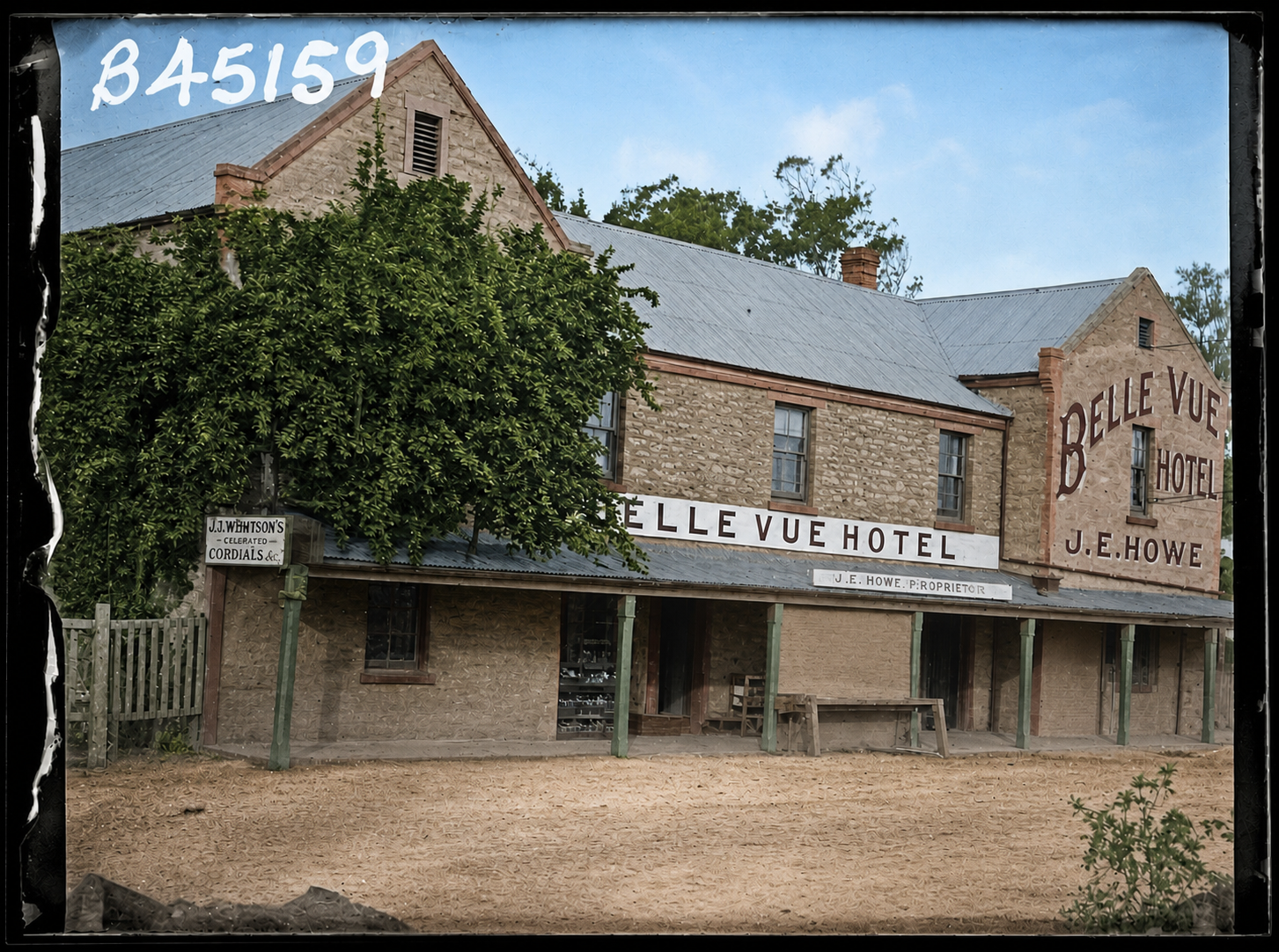
J. E. Howie — more correctly recorded as James Edgar Howie — appears to have been proprietor/licensee of the Bellevue Hotel, McLaren Vale from approximately 1915 to 1923.
The architecture of the hotel still reflects those layered periods of history. The original bluestone central section survives from the 1850s, while Hardy’s later additions gave the building a grander appearance more fitting for the prosperous wine district emerging around it. Its verandah, balcony and stone construction remain characteristic examples of early South Australian country hotel design.
What makes the Bellevue Hotel particularly important is how closely its story mirrors the development of McLaren Vale itself. The merging of Gloucester and Bellevue into the modern township during the early twentieth century reflected the district’s gradual consolidation around viticulture and wine production. The hotel sat directly within that evolution, transitioning from rural inn to wine merchant headquarters and eventually becoming part of the broader identity of the town.
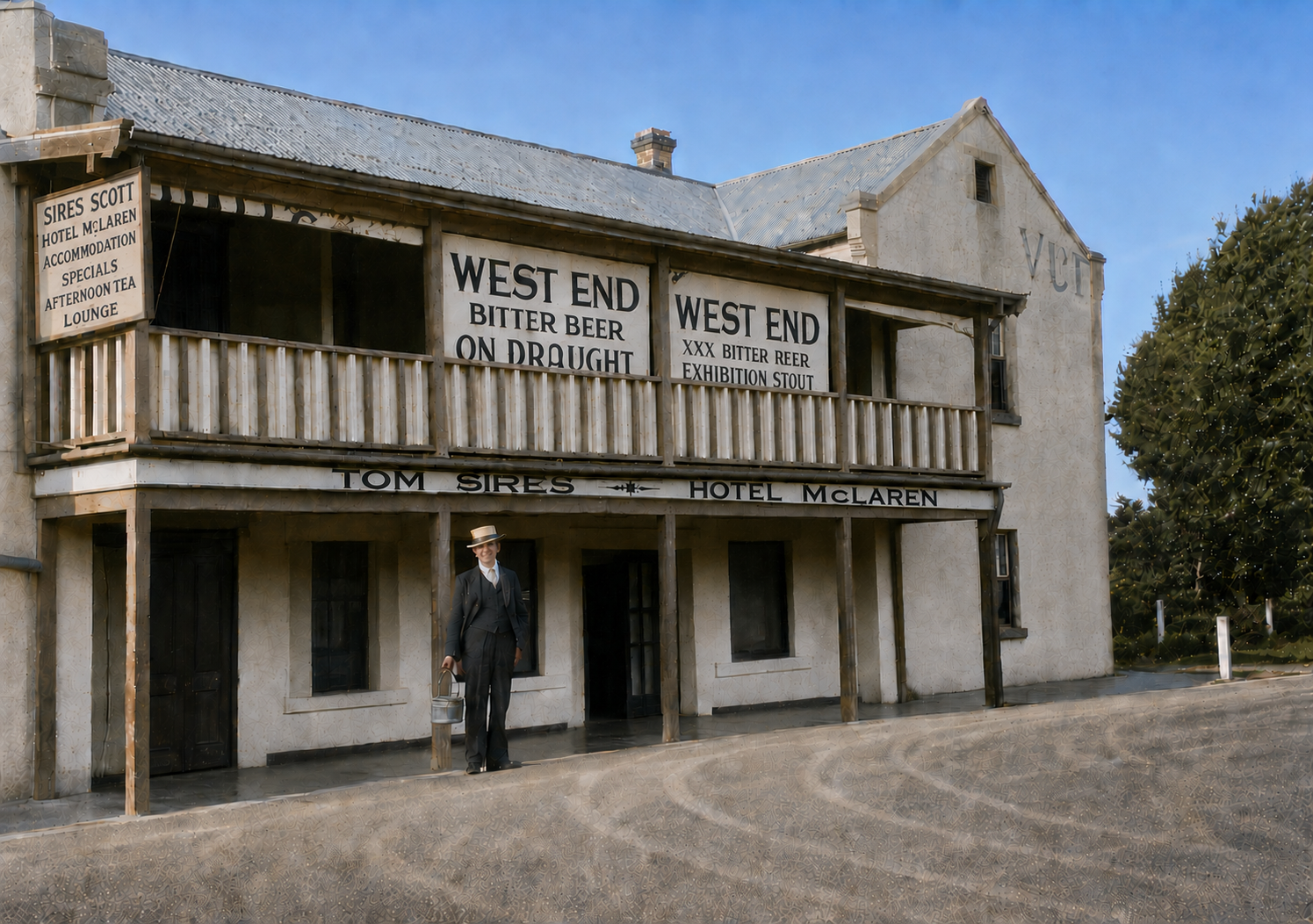
From 1939 it became known as Hotel McLaren.
Today the building survives as part of the modern Hotel McLaren precinct, but traces of the Bellevue name and heritage remain embedded throughout the site. The surrounding gardens, views toward Hardys Tintara, and the continued hospitality role of the building all connect modern visitors back to more than 160 years of local history.
Few buildings in McLaren Vale capture the continuity of the district quite like the Bellevue Hotel. From bullock teams and flour mills to vineyards and cellar doors, the structure has watched the region evolve through every major chapter of its history.
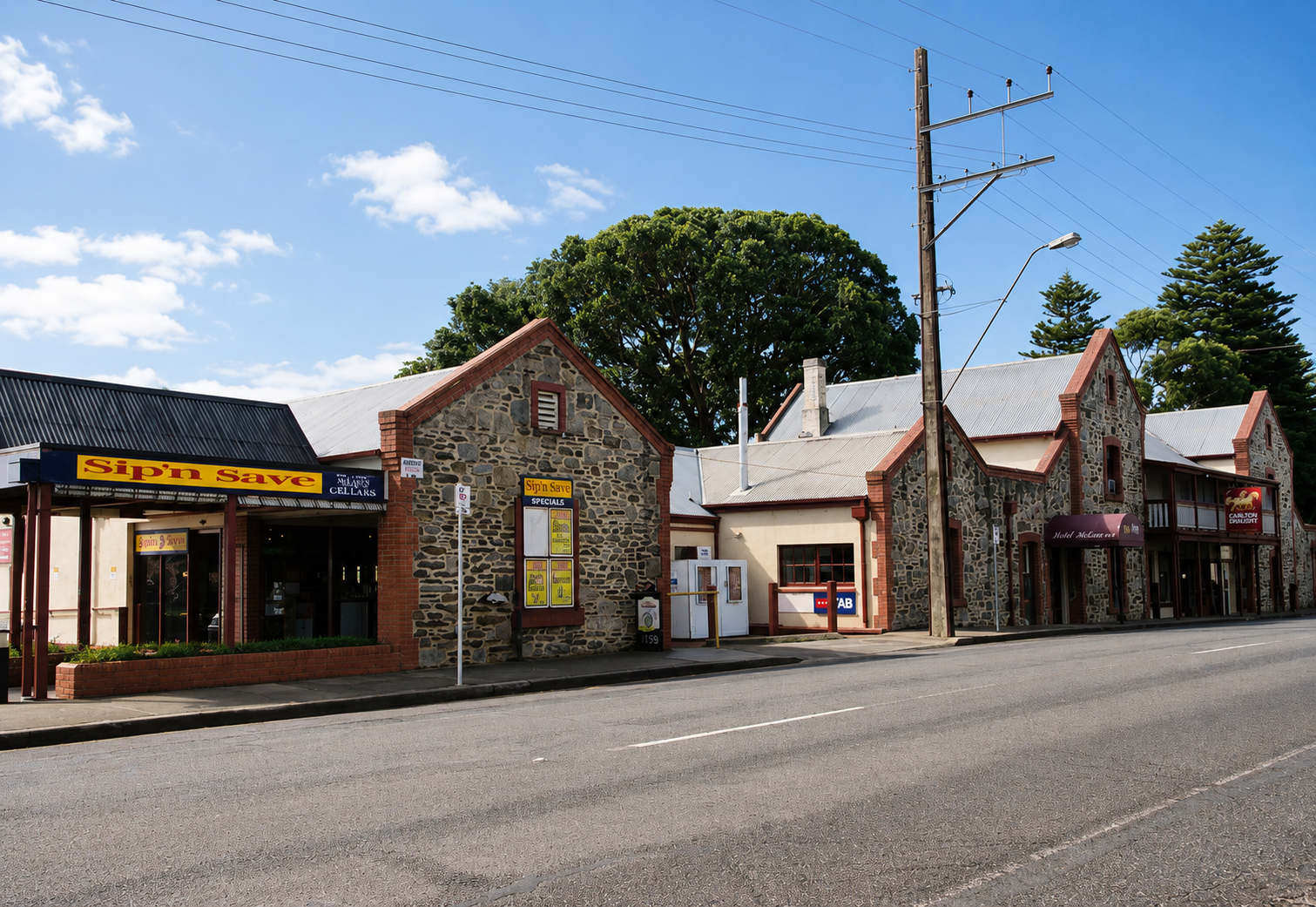
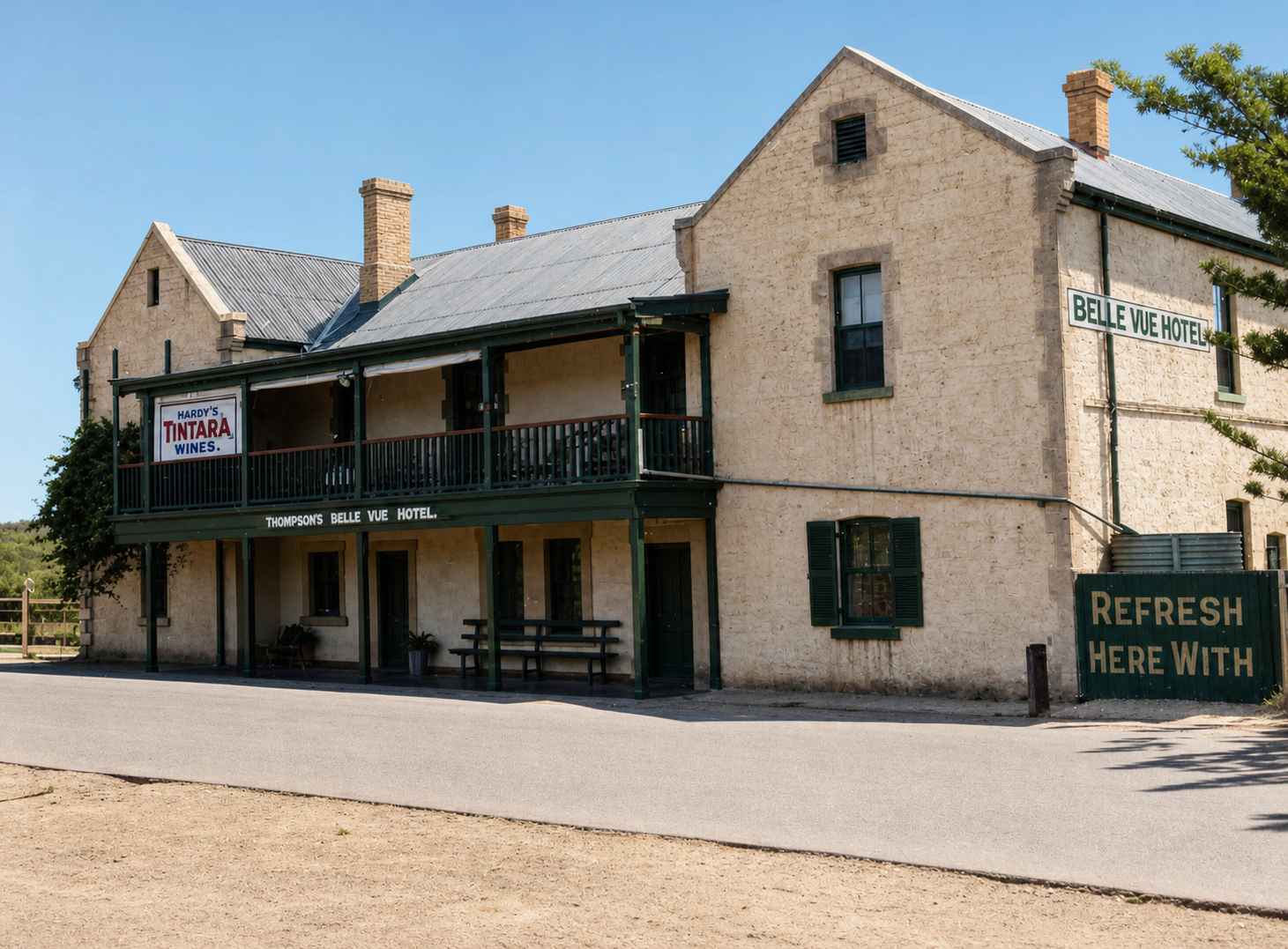
2006 Hotel appearance.